
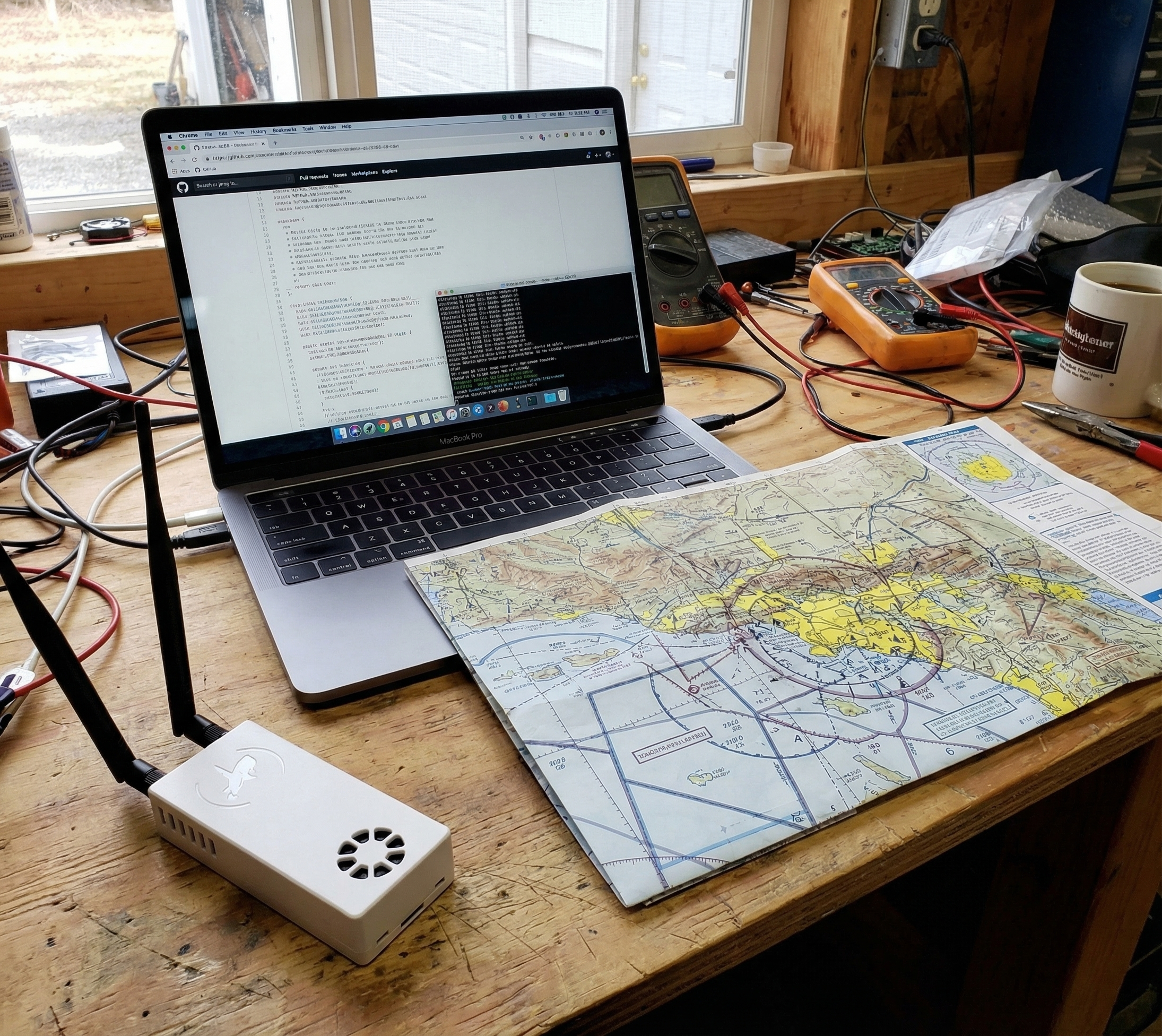
In 2015, a pilot named Chris Young published a GitHub repository called Stratux. He’d built an ADS-B receiver from a Raspberry Pi, two RTL-SDR dongles, and some code he wrote himself — total hardware cost under $70. Commercial equivalents cost $500–800. Within weeks, thousands of pilots had downloaded the software and built their own. Within months, the FAA was receiving letters from the Stratux community. Within years, the project had changed how GA pilots think about cockpit technology.
That’s what open source does in aviation. And we’re still early.
The Problem Stratux Solved
The FAA’s ADS-B mandate (effective January 1, 2020) required ADS-B Out equipment in most controlled airspace. The rule created a massive new market for ADS-B In receivers — portable devices that let pilots receive traffic and weather data in the cockpit on their iPads and EFBs.
Commercial ADS-B In hardware is good equipment. But it’s priced for the avionics market, which historically means “whatever the market will bear.” The Garmin GDL 39 — one of the most popular commercial portable ADS-B receivers — retailed for $599 to $799 depending on variant. For a $30,000 used Cessna pilot flying 50 hours a year, that’s a significant barrier.
Stratux eliminated the price barrier. Not by cutting corners — by using commodity hardware (Raspberry Pi, RTL-SDR) that mass production had driven to near-zero cost, and by publishing open-source software that anyone could audit, modify, and improve.
What Open Source Actually Means for Safety
The avionics industry sometimes treats open source as a safety concern. The opposite is closer to true.
When Stratux has a bug, it’s fixed in public. Anyone can see the issue, see the proposed fix, and see the testing before the fix is merged. The Stratux GitHub repository has hundreds of contributors who’ve each inspected the code. This is a meaningfully different security model than proprietary firmware that one company controls and audits internally.
Proprietary firmware can have bugs too — bugs that the company discovers, patches quietly, and ships in an update without ever telling users what was wrong. Open source doesn’t allow this. Everything is visible.
For supplemental situational awareness tools (which is what Stratux is — non-certified, non-primary), this matters. The community of pilots using and testing Stratux is larger than the QA department at most avionics manufacturers. Real-world flight testing happens at scale.
The Right to Repair Your Own Equipment
If a commercial ADS-B receiver fails, you send it to the manufacturer (or more likely, buy a new one — repairs are often not economical). The hardware is proprietary, the firmware is proprietary, and you have no recourse if the company discontinues the product or exits the market.
Stratux is repairable at the component level. SDR dongle failed? $15 replacement on Amazon. Raspberry Pi toast? $35 for a new board. GPS module dead? $10. Every part is commodity hardware that’s available from multiple suppliers indefinitely. The firmware is on GitHub — it won’t disappear if a company gets acquired or decides to discontinue the product line.
For equipment you depend on in the cockpit, right to repair isn’t just an ideological position. It’s a practical reliability argument.
Community Knowledge vs. Corporate Knowledge
The Stratux community has produced a staggering amount of practical knowledge. Forum threads with thousands of responses. YouTube build guides. Setup walkthroughs for every major EFB app. Troubleshooting guides for edge cases that no commercial manufacturer would have documented.
This knowledge lives on the internet permanently. It’s indexed by search engines, linked from aviation forums, and available to any pilot who needs it. When you’re stuck at 11 PM the night before a long cross-country trying to figure out why Stratux isn’t showing traffic in ForeFlight, you’ll find the answer — because someone had the same problem three years ago and posted the solution.
That’s the other thing open source produces: a community. Stratux users aren’t just customers. They’re contributors. Builders. Testers. People who care about the project because they use it and because they can participate in making it better.
The Economics of Open Hardware
Stratux didn’t make aviation companies poorer. It grew the market. Pilots who built their own Stratux became EFB power users — they subscribed to ForeFlight, bought better iPad mounts, upgraded their headsets. The accessibility of ADS-B In data pulled in pilots who never would have paid commercial hardware prices.
This is how open source usually works in hardware markets. The free availability of the platform expands the ecosystem. More pilots using EFBs means more EFB subscriptions means more investment in EFB development means better tools for everyone.
Stratux Today
The Stratux project is active. The community maintains the firmware, adds features, and tests on real aircraft. Commercial variants — pre-built units for pilots who want the Stratux capability without the assembly — have emerged from companies like Crew Dog Electronics that believe in the open-source model and sell hardware that runs the same community firmware.
The Crew Dog Electronics catalog offers pre-built Stratux units for pilots who want ready-to-fly equipment built on the open-source platform. Same firmware, same community support, no soldering iron required.
What Comes Next
Open-source avionics is still early. Stratux solved the ADS-B In problem. The same model could address other GA pain points: weather displays, engine monitoring, autopilot interfaces. The Raspberry Pi hardware platform that powers Stratux is capable of much more than ADS-B.
The barrier to entry for open-source avionics hardware has never been lower. Commodity single-board computers, affordable SDRs, accessible programming languages, and a global community of makers who are also pilots. The next Stratux — whatever problem it solves — is probably being built in someone’s garage right now.
That’s worth caring about.