
There’s a battle playing out in Congress right now that every GA pilot should know about. It’s about ADS-B — and it’s about something the FAA promised you wouldn’t happen.
You probably remember the 2020 ADS-B Out mandate. The pitch was simple: equip your aircraft with an ADS-B Out transponder, broadcast your position to the network, and everyone — ATC, nearby aircraft, ground stations — gets better situational awareness. Safer skies. Better traffic separation.
GA pilots spent over $500 million complying with that mandate. Not happily, but willingly — because the promise made sense. Your broadcast data would be used for air traffic safety and airspace efficiency. Full stop.
Nobody said anything about it being used to mail you a bill.
What’s Actually Happening
Here’s how it works: when you land at certain airports, third-party vendors capture your ADS-B Out broadcast, match your tail number against the FAA aircraft registry, and automatically send an invoice to the registered owner. You land, you don’t talk to anyone, you don’t sign anything — but a bill appears in your mailbox.
The airports contract out this billing to companies that have built a business around this exact workflow. ADS-B data goes in, fee invoices come out.
AOPA has been fighting this for a while, and recently escalated: the organization is calling on members to flood Congress with support for the Pilot and Aircraft Privacy Act (PAPA), introduced by Sen. Ted Budd (R-NC) and Rep. Bob Onder (R-MO). The bill would prohibit using ADS-B data as the mechanism to trigger airport fee invoices.
To be clear about what PAPA does and doesn’t do: airports could still charge fees. They could still use ADS-B data for traffic counts and operational efficiency. What would stop is the specific practice of using an aircraft’s ADS-B broadcast as an automated billing trigger. If an airport wants to charge you a fee, they need to do it through normal means — not through a surveillance system you were legally mandated to install.
Why This Matters Beyond the Billing
The immediate issue is obvious: pilots didn’t sign up to fund a nationwide surveillance billing system when they spent $500M+ complying with the mandate. But there’s a deeper principle at stake.
When you broadcast ADS-B Out, you’re participating in a public safety infrastructure. Your aircraft’s position goes to ATC, to other pilots, to ground stations. That’s the deal. The whole system works because everyone contributes to the shared picture, and everyone benefits from the shared picture.
The moment that broadcast data becomes a commercial data product used to track and bill individual pilots, the nature of that deal changes. You’re no longer a contributor to a safety network — you’re a data source being monetized without your consent.
Sound familiar? It’s the same argument the right-to-repair movement makes about software-locked hardware. When you’re required to participate in a system, you shouldn’t lose rights over what that system does with your data.
Where ADS-B In Fits
This is a good moment to think clearly about the two sides of ADS-B.
ADS-B Out is what you broadcast. It’s mandatory, it’s regulatory, and right now there’s a fight about who gets to do what with that data.
ADS-B In is what you receive. Free weather and traffic data — NEXRAD, METARs, TAFs, TFRs, live traffic positions — broadcast continuously from FAA ground stations to anyone with a receiver. No subscription. No invoice. No third party standing in the middle.
ADS-B In is the part of the equation pilots most often miss. The FAA built out the ground station network, the data is public, and it’s broadcast for free to any equipped aircraft. The same infrastructure that someone wants to use to bill you is also giving away real-time weather and traffic data to anyone with a receiver in their cockpit.
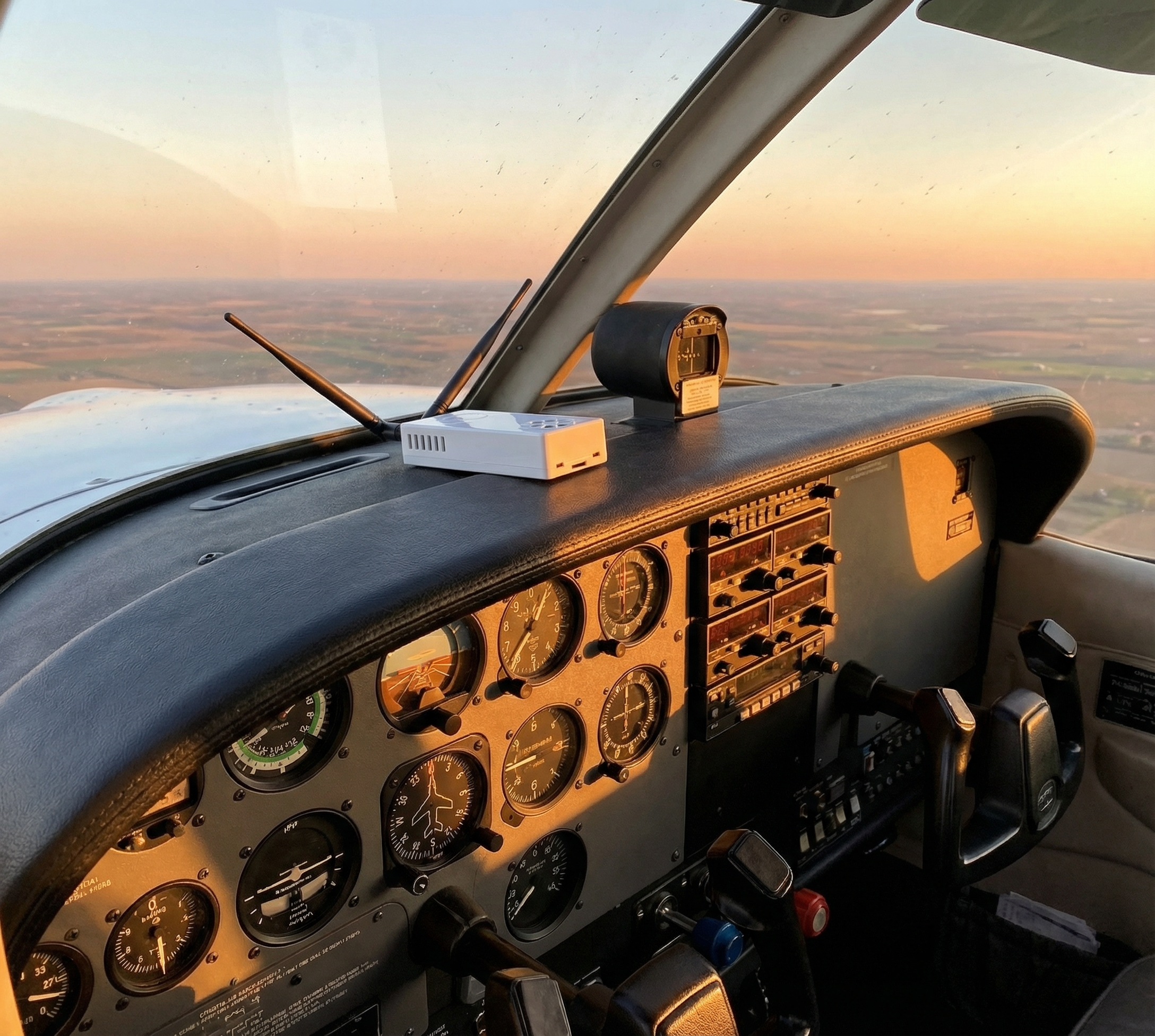
A Stratux receiver gives you access to all of that. One-time cost. No monthly fee. No one monitors which airports you land at.
We’re a little opinionated about the data-should-be-for-pilots part.
What You Can Do
If you agree that ADS-B data shouldn’t be repurposed into a fee-collection mechanism, AOPA has made it easy to act. They’ve set up a direct link to help members contact their elected representatives: aopa.quorum.us/campaign/155573.
The PAPA bill has bipartisan support and a clear, limited scope. It doesn’t dismantle airport fees. It just stops one specific use of surveillance data that pilots didn’t consent to when they complied with the 2020 mandate.
The Bottom Line
The ADS-B Out mandate was sold as a safety tool. GA pilots spent half a billion dollars making it happen. Using that data to auto-generate fee invoices isn’t what anyone agreed to.
We believe in open data — ADS-B In data belongs to pilots because they built the network that generates it. That same principle applies to ADS-B Out: your broadcast shouldn’t be someone else’s revenue stream.
Support the PAPA bill. And if you’re not already getting the full benefit of ADS-B In on your flights, here’s how to start →