
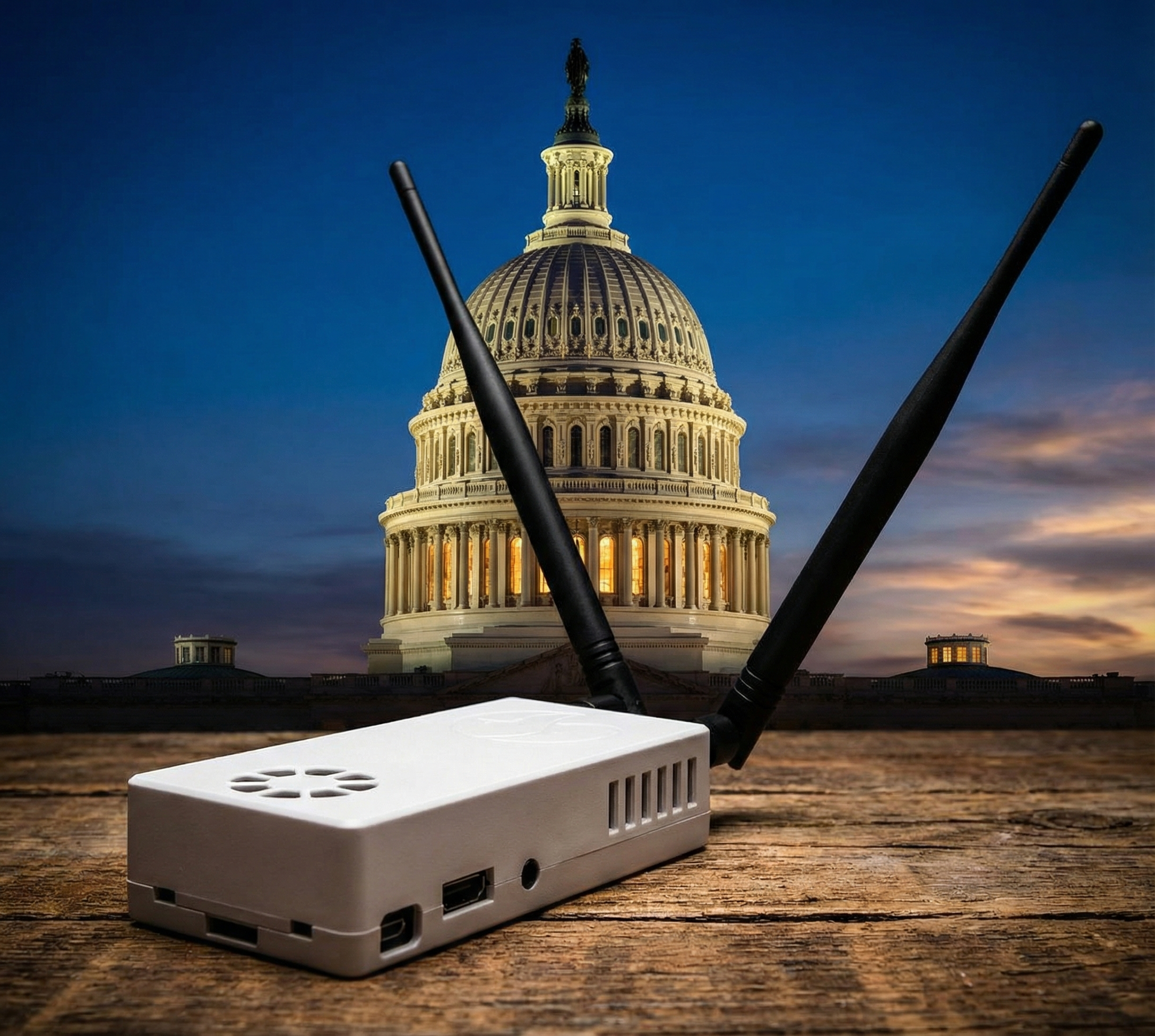
The House of Representatives failed to pass the ROTOR Act on February 24, 2026 — but buried inside the congressional debate was something GA pilots should know: the nation’s top aviation safety official stood before Congress and said that a $400 portable ADS-B receiver connecting to an iPad is the affordable compliance path for general aviation.
That’s not our marketing copy. That’s the NTSB Chair under oath.
Here’s what happened, what it means, and where things go from here.
What Is the ROTOR Act?
The ROTOR Act was introduced following the January 2025 midair collision near Washington, D.C., in which a commercial American Airlines jet struck a U.S. Army Black Hawk helicopter, killing 67 people. The National Transportation Safety Board has been recommending broader ADS-B In deployment since 2008 — the DCA collision put that recommendation back in the spotlight.
The bill, which already cleared the Senate in December 2025, would have required aircraft operating around busy airports to install ADS-B In systems — technology that lets pilots receive traffic data about nearby aircraft. ADS-B Out (which broadcasts an aircraft’s position) has been federally required since 2020. ADS-B In is the complementary receiver side, and it’s currently optional.
Under a fast-track procedure requiring a two-thirds majority, the ROTOR Act received 264 votes — close, but not enough. 133 lawmakers voted against it, pushing it below the threshold.
So it failed. For now.
Why It Failed (And Why That’s Not the Whole Story)
Opposition came from an unusual coalition: Airlines for America, general aviation industry groups, and the Pentagon — which reversed its earlier support, citing unresolved “budgetary burdens and operational security risks.”
The competing House bill, introduced just days before the vote, takes a study-first approach: direct the FAA to analyze available technology and determine the right mandate before requiring anything. House Transportation & Infrastructure Committee Chairman Sam Graves said markup could happen as early as next week.
In other words: this is not over. ADS-B In is going to be debated — probably repeatedly — over the next year. Every GA pilot should understand where this is heading.
The Cost Question (and What NTSB Chair Homendy Said)
One of the central arguments against the mandate has been cost. Aviation safety equipment isn’t cheap, and not every small plane operator has deep pockets.
NTSB Chairwoman Jennifer Homendy addressed this directly in Congressional testimony. Airlines like American Airlines equipped over 300 Airbus A321s with ADS-B In at roughly $50,000 per aircraft — a cost that got cited as a burden. But Homendy made clear that’s the airline scenario, not the general aviation one.
Her words: general aviation pilots have the option of using a portable receiver that costs about $400 and works with an iPad.
That’s it. Portable. iPad-connected. $400.
If that description sounds familiar, it should — it’s exactly how Stratux works.
What Stratux Is and Why This Matters
Stratux is an open-source ADS-B In receiver. It plugs into 12V or USB power, broadcasts over Wi-Fi, and connects to your iPad running ForeFlight®, Garmin Pilot, AvPlan, or any other EFB you prefer. It receives both UAT (978 MHz) and 1090-ES traffic, plus FIS-B weather. No monthly subscription. No vendor lock-in. No sealed chassis you can’t repair.
The Crew Dog Electronics pre-built Stratux starts at $379. The kit version is $449 (components to build your own).
The NTSB Chair described “about $400” as the affordable ADS-B In path for GA pilots. We’re within that range, and we ship today — not on a preorder schedule.
UAT coverage, worth noting: Stratux receives UAT ADS-B traffic in both the United States and Canada, where CIFIB towers provide coverage. If you fly cross-border, you’re covered.
What GA Pilots Should Watch For
The ROTOR Act is likely not done — the House Transportation Committee is expected to mark up its version soon, and the debate will continue. A few things to track:
- House bill markup: Could happen within weeks. The House approach (study-first) differs from the Senate mandate-now approach. The final outcome will likely be a compromise.
- FAA study timeline: If the House version passes, the FAA will define what “ADS-B In compliance” looks like for GA. Portable receivers have been explicitly acknowledged as a valid option.
- Cost as the deciding factor: Congressional opposition kept circling back to cost. The fact that the NTSB Chair cited $400 portable receivers as a solution — on the record, in Congress — means that figure is now part of the policy discussion.
None of this means you need to scramble to buy anything. ADS-B In is not mandated for GA pilots right now. But if you’ve been curious about situational awareness — knowing where other traffic is before ATC calls it out — this is a good moment to understand your options.
The Bigger Picture: Situational Awareness Doesn’t Wait for Legislation
Here’s the honest pilot’s take: the DCA collision happened, in part, because the helicopter crew didn’t have real-time traffic awareness. The investigation is ongoing and the full picture is still emerging. But the NTSB’s two-decade-long recommendation for ADS-B In exists because the technology works.
You don’t need a mandate to decide that knowing where other aircraft are is worth something to you. Pilots have been running Stratux in cockpits, on headsets, in backcountry strips, and yes, in paragliders for years. Not because they were required to — because it makes sense.
Bottom Line
The ROTOR Act failed in the House. The policy debate continues. But the NTSB Chair’s testimony drew a clear line: affordable ADS-B In compliance for GA pilots runs about $400, works with an iPad, and doesn’t require tearing apart your panel.
That’s where we’ve been sitting for a while. If you want to see what a Stratux setup looks like, the gear is at crewdogelectronics.com.
Fly safe. Know where the traffic is.
Have questions about Stratux setup? Check out our step-by-step Stratux setup guide or reach out directly.