
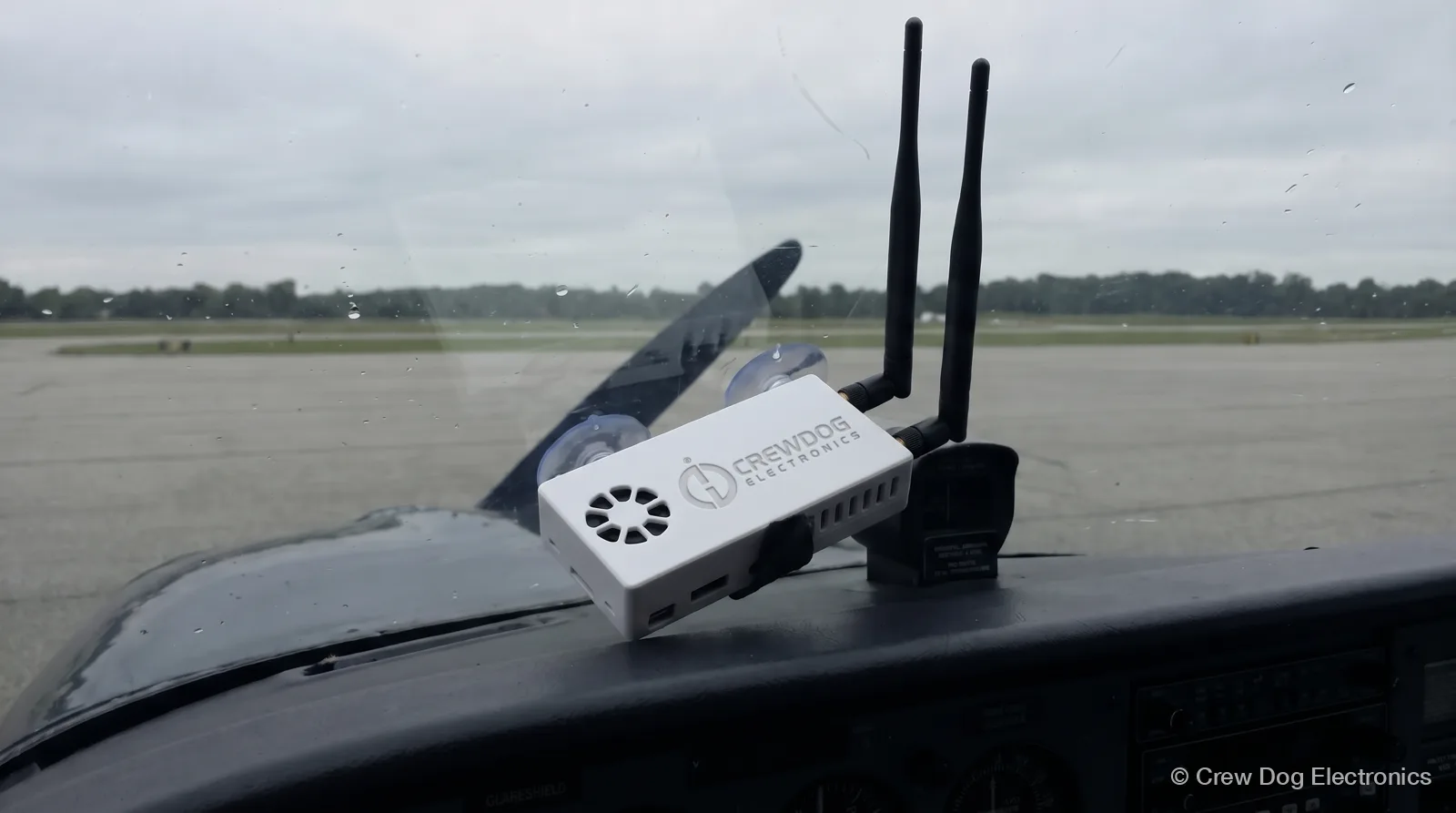
AHRS stands for attitude and heading reference system. It’s a handful of solid-state sensors that tell your display which way the airplane is pitched, banked and pointed. It does the job of the old vacuum attitude gyro and directional gyro, with nothing spinning. Glass panels use one. So do some autopilots and some portable ADS-B receivers, including ours.
What an AHRS measures
Gyros measure how fast the unit is rotating. Accelerometers feel which way gravity pulls, which gives the gyros something to correct against. A magnetometer (or a flux valve in a panel install) gives heading. Software blends all three, because none of them is trustworthy alone (FLYING magazine, 2016).
Gyros drift, and the accelerometers’ sense of “down” pulls them back.
I remember reading about the Kalman filter in the tech manuals for the inertial units on jets I flew in the military and thinking it sounded like Star Wars tech. The software in a portable AHRS solves the same problem: blend sensors that each lie a little into one answer you can trust.
The sensors inside an AHRS, one by one
On a small AHRS board, each sensor is a chip, usually all on one board.
- Gyro (rate sensor). Measures how fast the unit is turning. It reacts fast, but its error builds into drift, so it can’t hold the horizon by itself.
- Accelerometer. Senses which way gravity pulls, which gives the software a “down” to pull the gyro back to. In flight it also feels the airplane’s own acceleration. On its own it can’t tell a tilt from a steady turn or a speed change, so the software checks it against other inputs (Analog Devices AN-1057).
- Magnetometer. Senses the Earth’s magnetic field, which a full AHRS can use for heading (FLYING magazine, 2016). How much a product leans on it varies. It only helps if the unit knows which way it’s mounted.
- Pressure sensor (barometer). Lots of portable boards add one. Stratux uses it for vertical speed and checks it against GPS altitude. Readings that disagree wildly get thrown out (Stratux source,
main/sensors.go).
On a Stratux the motion chip is a BMX160, ICM-20948 or MPU-9250-family part, and the pressure chip is a BMP-388, BMP-280 or BMP-58x. Which one you have depends on the board revision. The GPS/AHRS page in the web interface shows whether the sensor was found (same source). If it says the sensor wasn’t found, drop us an email. Out of a few thousand chips we’ve seen a few dozen bad ones, and a bad one can be replaced. Eric (bonanzaeric) wrote the original Stratux AHRS code, so he’s the one to thank.
How it differs from the gyros it replaced
A traditional attitude indicator is a spinning gyro. An AHRS has nothing spinning. The sensors are tiny micro-electromechanical (MEMS) chips. FLYING credits the car industry for making them smaller, lighter and cheaper, and says AHRS units have beaten mechanical gyros on accuracy and reliability for years.
The display looks the same as it always did. If you fly a glass panel, an AHRS is feeding it, so it’s worth knowing what it needs.
What a portable AHRS can and can’t do
A portable AHRS gives your tablet a backup attitude display and synthetic vision. It’s not certified, and no portable AHRS from anybody is. Our Stratux receivers come with an AHRS board, and apps that support it show pitch, bank and a terrain view from the same data.
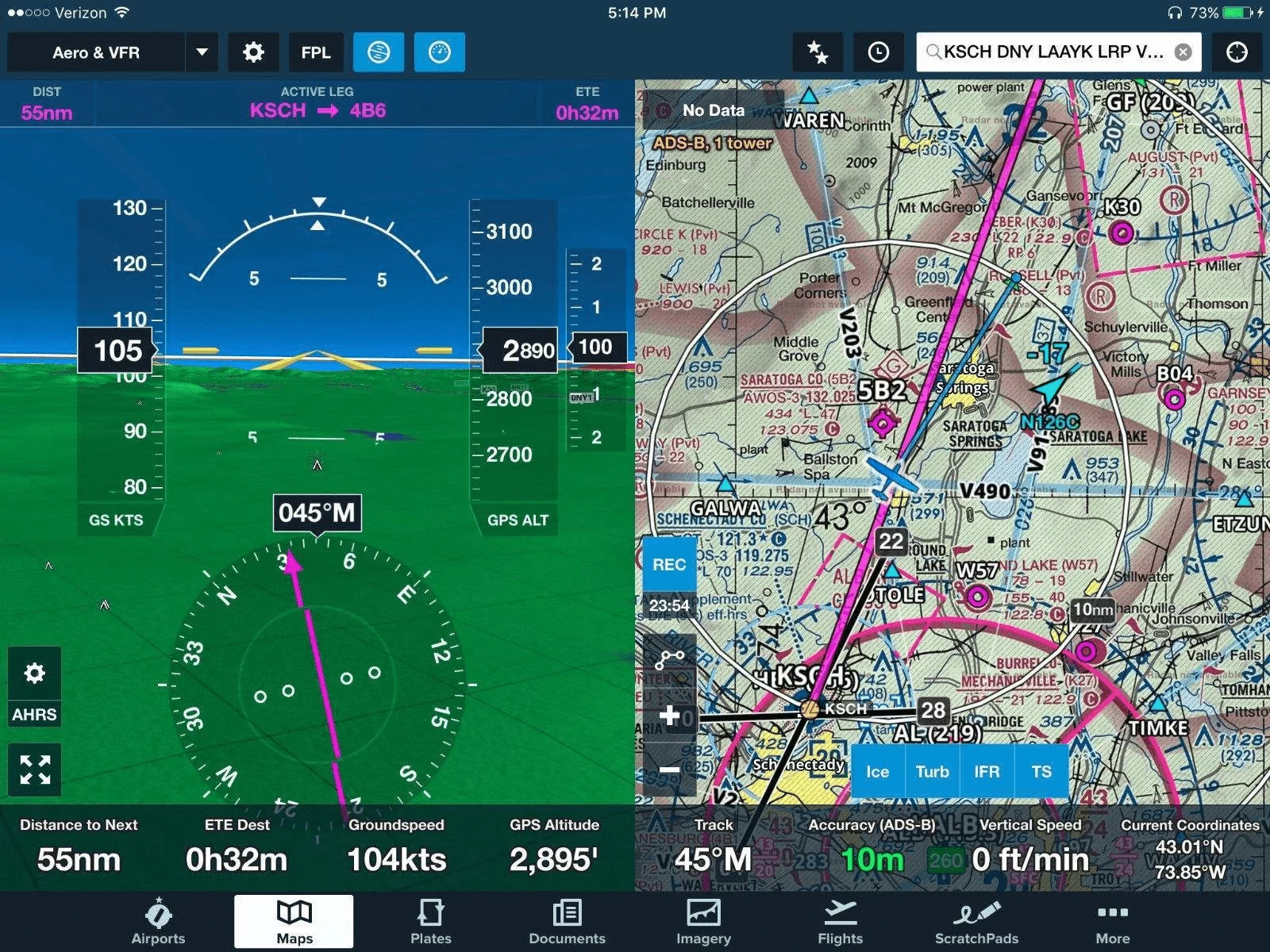
Stratux only sends attitude as valid when it has a GPS fix. Tested indoors with no fix, it looks broken when it isn’t.
What makes it work well:
- Mounting. The unit has to know which way it’s sitting. Set the orientation in the Stratux web interface after you mount it, and again any time the mount changes.
- Calibration. Do the gyro calibration on the ground, level and still.
- GPS. The software also uses GPS track and vertical speed, so it needs a GPS fix. A common “my AHRS is broken” message we get is someone testing it on the ground with no fix and no movement. “Ground test mode” on the ramp is normal. It clears when GPS horizontal accuracy is under 30 m. Movement isn’t a condition.
- Not for you if you want an attitude source to fly instruments by. That’s what your panel is for.
For the software side, how the Stratux AHRS software works on stratux.com walks through sensors, fusion and calibration. For setup on your unit, see Stratux AHRS: how it works and what to expect.
Do you need an AHRS in a portable receiver?
If you want a pitch and roll picture in your EFB, yes. If all you want is traffic and weather, it’s optional. ForeFlight will draw synthetic vision terrain and obstacles without one, but the attitude part needs an AHRS (ForeFlight support). We wrote up how to get synthetic vision in ForeFlight with Stratux AHRS. A backup attitude display is cheap to carry. It doesn’t replace a panel instrument, and it’s not a reason to push into weather you couldn’t otherwise handle.
Terrain on the screen doesn’t prove the board works, since ForeFlight draws terrain without it. Look for pitch and roll that move with the airplane.
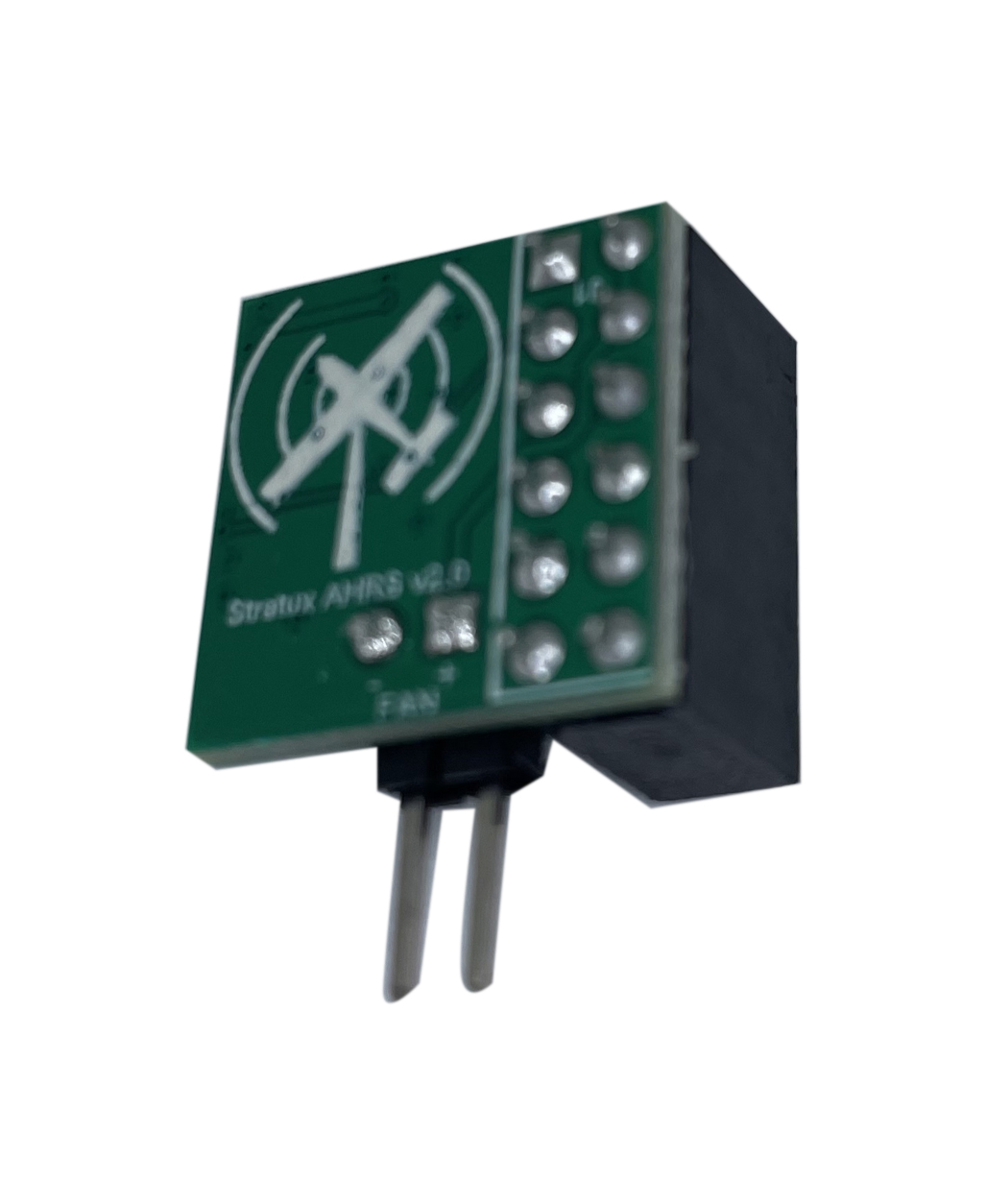
That’s the AHRS board we sell. It plugs onto the Raspberry Pi’s pins inside the receiver.
FAQ
What does AHRS stand for?
Attitude and heading reference system.
Is an AHRS the same as a gyro?
No. A gyro is one of the sensors inside it. The AHRS blends gyros, accelerometers and a magnetometer.
Is a portable AHRS legal to use for IFR?
It’s not certified for IFR, and no portable AHRS is. Your required instruments still have to be the panel ones. Treat it as situational awareness and a backup.
Why does my AHRS say ground test mode?
That’s normal on the ground. It needs a good GPS fix. We see this one a lot. It clears when GPS horizontal accuracy is under 30 m.
Next step
Got a receiver with AHRS? Open its web page on the ground, tilt the unit and make sure the attitude moves, then set the orientation before your next flight. Still shopping? The Stratux with internal GPS comes with the AHRS built in.
Compatible with ForeFlight® and most other EFBs via standard GDL90.