Posted on Leave a comment

The True Cost of ADS-B: No Subscription Fees, Ever

Most pilots shopping for an ADS-B receiver focus on the sticker price: $500, $600, maybe $700 for a good unit. But here’s what the brochures don’t tell you: hidden costs that add up over time. Subscription fees for “premium traffic alerts.” Cloud-based firmware update services that require annual payments. Proprietary ecosystems that force you into premium EFB tier upsells.

Stratux takes a different approach: one price, no subscriptions, ever. Open-source software, community-maintained, and zero vendor lock-in. This post breaks down the real cost of ADS-B ownership — and why paying once beats paying forever.

What You’re Really Paying For

When you buy a commercial ADS-B receiver, you’re paying for several things:

  • Quality hardware (receivers, antennas, GPS)
  • Corporate profit margins
  • Ongoing software development costs

Many companies recoup those development costs through subscriptions or high upfront pricing. Cloud-based firmware update services, premium weather tiers, and bundled EFB trial subscriptions that automatically convert to paid plans — these are all ways manufacturers turn a one-time hardware purchase into recurring revenue.

Stratux’s model is different. You’re paying for quality hardware at a fair price. The software is open source and free forever, maintained by a community of pilots and developers. There’s no middleman, no corporate markup, and no vendor telling you which EFB you must use.

You get raw ADS-B data. You choose your app — ForeFlight®, iFly, WingX, FltPlan Go, whatever works for you. No lock-in. No games.

The Subscription Trap Pilots Face

If you’re a pilot, you’re probably already paying for an EFB subscription:

  • ForeFlight: $100-300/year (depending on tier)
  • Garmin Pilot: ~$150/year
  • iFly GPS: ~$70-90/year

These subscriptions are worth it. You’re getting chart updates, flight planning tools, logbooks, and airport data. But here’s where it gets expensive: certain ADS-B receiver manufacturers charge additional fees for features like “premium traffic alerts,” “enhanced NEXRAD radar,” or cloud-based firmware updates — all of which repackage free FAA data or lock standard maintenance behind a paywall.

With Stratux, ADS-B data is free because it comes directly from FAA ground stations. Software updates are free because they’re open source. You’re already paying for an EFB. Don’t pay twice for the same information.

True Cost Comparison: 5-Year Ownership

Let’s run the numbers. Here’s what ADS-B receivers actually cost over five years of ownership:

Receiver Upfront Cost Annual Fees 5-Year Total
Stratux (Crew Dog) $379-449 $0 $379
Sealed receiver (no subscriptions) $599 $0 $599
Receiver with premium features $499 $49/year $744
Receiver with cloud + enhanced weather $549 $79/year $944

Stratux: Starting at $379. Pay once. Fly for five years — or ten, or twenty. Zero additional costs.

Even sealed competitors without subscriptions charge $150+ more upfront. And the ones with subscriptions? You’re paying $300 to $500 extra over five years for “enhancements” that are really just marketing.

Full transparency: Some pilots prefer sealed units because they’re simpler out of the box. That’s fine. But know what you’re paying for, and know that simplicity doesn’t have to cost $500 extra.

What “No Subscription” Actually Means

ADS-B weather and traffic data is free. It comes from FAA ground stations that your tax dollars built as part of the ADS-B mandate infrastructure. Stratux is a receiver — it picks up those signals and sends them to your EFB. There are no server costs, no cloud processing fees, and no proprietary software licenses to maintain.

So why do certain manufacturers charge subscriptions?

  • Proprietary software development: They need to recoup R&D costs for their closed-source apps
  • Cloud infrastructure: Routing data through proprietary servers for “enhancements” creates ongoing server costs
  • Profit margins: Recurring revenue models are more profitable than one-time hardware sales

Stratux doesn’t charge subscriptions because:

  • Open-source software: The community maintains it, not a single company. Updates are free forever.
  • No cloud dependency: Direct receiver-to-EFB connection. No middleman servers.
  • Transparent pricing: We price hardware fairly. That’s it. No games, no lock-in.

We’re not anti-profit. We’re pro-transparency. You should know exactly what you’re paying for and why.

The Right-to-Repair Advantage

Here’s the long-term cost advantage nobody talks about: repairability.

When a sealed receiver fails (GPS module dies, SDR stops working, power issue):

  • You can’t open it
  • You send it back for repair ($$$ + weeks of downtime)
  • Or you buy a new unit (another $600)

When Stratux fails:

  • GPS module dies? Replace it yourself for $15
  • SDR dongle stops working? Swap it for $25
  • Battery degraded? New battery, $20
  • Total downtime: One day (order the part, swap it yourself)

This is the “Framework Laptop of aviation” philosophy. Every component is replaceable. Stratux can last 10+ years because when something breaks, you fix it instead of replacing the entire unit.

Sealed units have a lifespan. When the GPS fails out of warranty, you’re buying a whole new receiver. With Stratux, you’re buying a $15 part.

Over the lifetime of the unit, repairability saves hundreds of dollars.

Pay Once, Fly Forever

Let’s recap:

  • Stratux: Starting at $379, no subscriptions, fully repairable, open source
  • Total 5-year cost: $379
  • Competitors: $600 to $900+ over the same period

You own it. No vendor lock-in. No recurring fees. No forced upgrades. No “premium tier” upsells.

If you’re tired of subscription fatigue in aviation, Stratux is the one-time purchase that keeps working.

Shop Stratux:

Questions? Email us at [email protected] — real pilots, real support.
Posted on Leave a comment

ADS-B Receivers Under $500: 2026 Buyer’s Guide

The market for portable ADS-B receivers has matured significantly since the 2020 mandate. What was once a Wild West of overpriced, underperforming gadgets is now a competitive landscape with solid options at every price point. If you’re shopping for an ADS-B In receiver in 2026, you have real choices.

This guide compares the top portable ADS-B receivers available for under $500, focusing on what pilots actually care about: performance, repairability, value, and real-world usability.

The Contenders

We’re comparing five popular units, all under $500:

  • Stratux (DIY or pre-built)
  • ForeFlight Sentry Mini
  • Garmin GDL 50
  • uAvionix Ping
  • Appareo Stratus 3

(We’re excluding panel-mount and ADS-B Out units—this is strictly about portable ADS-B In receivers.)

Quick Comparison Table

Model Price Bands AHRS Battery Repairable
Stratux $210-449 Dual (978+1090) Optional External ✅ Yes
Sentry Mini $299 Dual Yes Internal (6hr) ❌ No
Garmin GDL 50 $449 Dual Yes Internal (6hr) ❌ No
uAvionix Ping $199 Single (978 or 1090) No Internal (8hr) ❌ No
Stratus 3 $599 Dual Yes Internal (8hr) ❌ No

Note: Stratus 3 is included for reference but exceeds the $500 budget.

Stratux: The Repairable Choice

Price: $210-230 (DIY) or $379-449 (pre-built)
Bands: Dual (978 + 1090 MHz)
AHRS: Optional (quality varies)
Battery: External USB power or battery pack

What Makes Stratux Different:

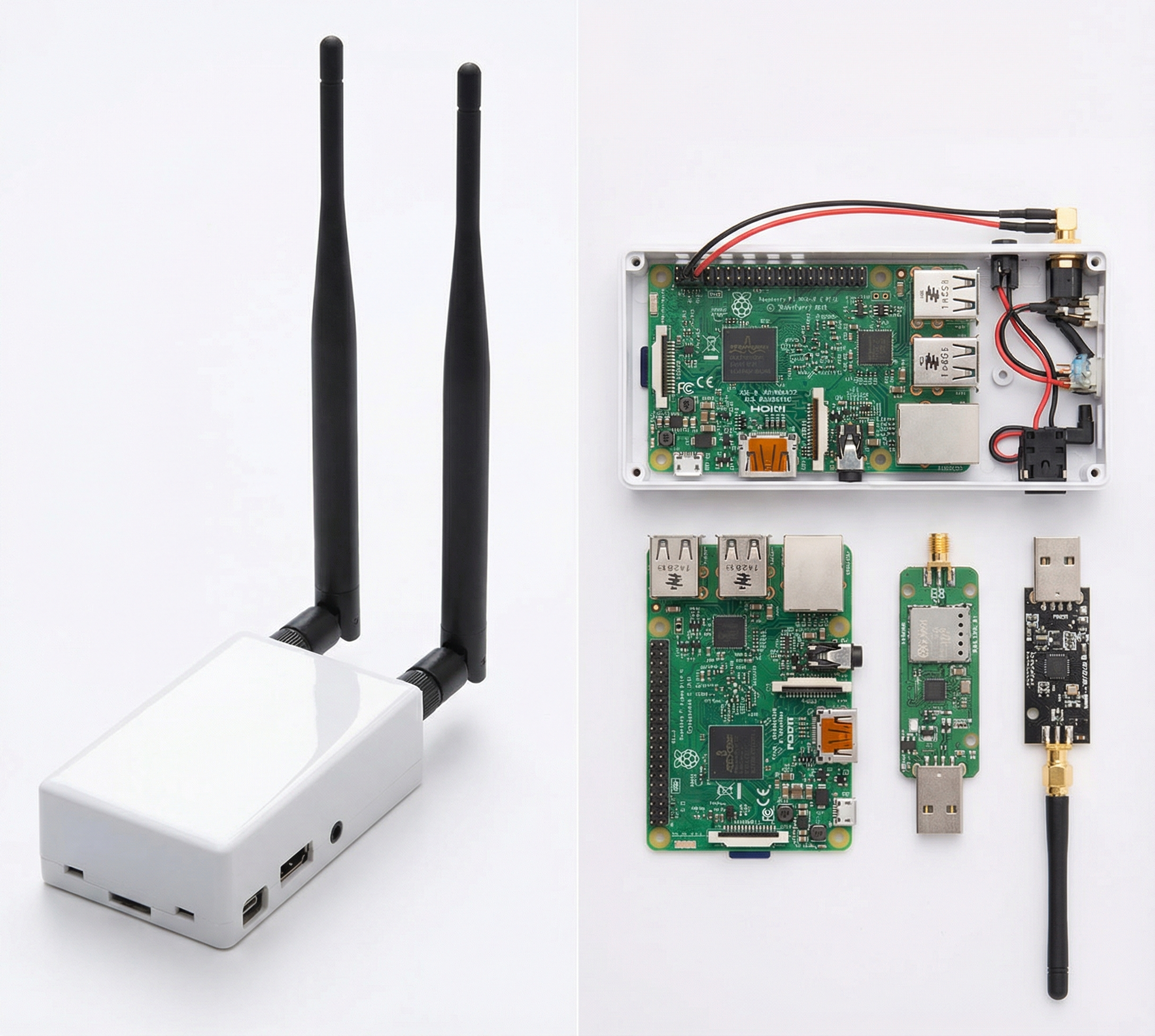
Stratux is the only open-source, user-repairable option on this list. Think of it as the Framework Laptop of ADS-B receivers. Every component is modular and replaceable:

  • SDR dongle fails? Swap it for $25
  • SD card corrupts? Replace it for $10
  • Want better antennas? Upgrade them
  • Raspberry Pi dies? Replace it and keep the rest

Commercial units are sealed black boxes. When the internal battery dies (and it will, in 3-5 years), you’re looking at expensive service or full replacement. Stratux has no such planned obsolescence.

Performance:

  • Traffic reception: Excellent on dual-band. Comparable to Sentry and GDL 50.
  • Weather: Full FIS-B, same as everyone else (it’s broadcast, not device-dependent).
  • GPS: Solid, though not quite as fast to acquire as Garmin’s proprietary GPS.
  • AHRS: Yes, with proper mounting and calibration. A valuable add-on for synthetic vision and backup attitude reference.

Best For:

  • Pilots who value repairability and longevity
  • Budget-conscious flyers (DIY route saves $200+)
  • Tinkerers who like understanding their tools
  • Multi-device households (Android + iOS compatibility)

Shop pre-built Stratux units at Crew Dog Electronics

ForeFlight Sentry Mini: The iOS Sweet Spot

Price: $299
Bands: Dual (978 + 1090 MHz)
AHRS: Yes, certified-quality
Battery: Internal, ~6 hours

Strengths:

  • Excellent AHRS—reliable, smooth, usable for synthetic vision
  • Seamless ForeFlight integration (it’s made by ForeFlight)
  • Compact and well-built
  • CO detector (nice safety feature)
  • Internal battery means no wires in the cockpit

Trade-offs:

  • iOS-only (won’t work with Android EFBs)
  • Not repairable—when the battery dies, you’re done
  • Pricier than Stratux for similar traffic/weather performance

Best For:

  • Dedicated ForeFlight users on iOS
  • Pilots who want reliable AHRS without DIY hassles
  • Those who value a polished, integrated experience

Bottom line: If you’re all-in on ForeFlight and don’t care about repairability, Sentry Mini is excellent. But you’re paying for ecosystem lock-in.

Garmin GDL 50: The Premium Portable

Price: $449
Bands: Dual (978 + 1090 MHz)
AHRS: Yes, Garmin-quality
Battery: Internal, ~6 hours

Strengths:

  • Top-tier AHRS—Garmin’s sensor fusion is industry-leading
  • Works with Garmin Pilot, ForeFlight, and others
  • Rugged, well-built hardware
  • Fast GPS acquisition
  • Excellent range on both bands

Trade-offs:

  • $449 is steep for a portable receiver
  • Not repairable (typical sealed Garmin design)
  • Garmin Pilot subscription adds to total cost

Best For:

  • Garmin ecosystem users (panel + EFB integration)
  • Pilots who demand the best AHRS performance
  • Those with budget for premium gear

Bottom line: GDL 50 is objectively excellent, but you’re paying Garmin’s premium for features that Stratux delivers 90% as well for half the cost.

uAvionix Ping: The Budget Single-Band Option

Price: $199
Bands: Single (978 UAT or 1090 ES, choose one)
AHRS: No
Battery: Internal, ~8 hours

Strengths:

  • Cheapest commercial option
  • Tiny and lightweight
  • Long battery life
  • Works with most EFB apps

Trade-offs:

  • Single-band only—you choose 978 OR 1090, not both
  • No AHRS
  • Reception range is good but not great
  • Not repairable

Best For:

  • VFR pilots who fly mostly in the US and only need 978 UAT
  • Ultra-budget buyers ($199 is compelling)
  • Pilots who already have GPS and don’t need AHRS

Bottom line: Ping is fine if you’re okay with single-band. But for $10-50 more, DIY Stratux gives you dual-band. For $100 more, pre-built Stratux gives you dual-band with support.

Appareo Stratus 3: Over Budget But Worth Mentioning

Price: $599 (exceeds our $500 limit, but included for completeness)
Bands: Dual (978 + 1090 MHz)
AHRS: Yes, very good
Battery: Internal, ~8 hours

Stratus 3 is a solid unit with excellent build quality and performance. But at $599, it’s hard to justify unless you’re deeply committed to the ForeFlight + Stratus ecosystem and money is no object.

For $599, you could:

  • Buy a pre-built Stratux ($399) + spare parts + backup battery pack ($200 total)
  • Buy a Sentry Mini ($299) + a backup Stratux ($379) for redundancy

Stratus 3 is good, but the value proposition is weak in 2026.

The Repairability Factor

Let’s talk about something most buyer’s guides ignore: what happens in 3-5 years when the internal lithium battery degrades?

  • Sentry, GDL 50, Ping, Stratus: Battery is sealed inside. Replacement requires factory service (if available) or buying a new unit.
  • Stratux: No internal battery. Use any USB power source or external battery pack. When the battery pack wears out, replace it for $20-40. The Stratux itself lasts indefinitely.

This is the Framework Laptop philosophy: design for longevity, not planned obsolescence. Commercial units have a 5-7 year lifespan before they become e-waste. Stratux can be maintained and repaired forever.

Feature Comparison: What Actually Matters

Traffic Reception (Dual-Band):

Winner: Tie between Stratux, Sentry Mini, GDL 50, and Stratus 3. All perform well. Ping loses for being single-band.

Weather (FIS-B):

Winner: Tie. FIS-B is broadcast on 978 MHz; any dual-band receiver gets the same data.

AHRS Quality:

Winner: GDL 50 and Sentry Mini edge ahead with GPS-aided algorithms, but all portable units use similar MEMS sensors. Stratux AHRS delivers excellent value at a fraction of the cost — and it’s the only one you can mount exactly where you want it.

Value (Performance per Dollar):

Winner: Stratux. $210 DIY or $379 pre-built for dual-band traffic and weather is unbeatable.

Repairability & Longevity:

Winner: Stratux. No contest. It’s the only user-serviceable option.

Ease of Use:

Winner: Sentry Mini and GDL 50 (plug-and-play, no assembly). Stratux requires more initial setup.

Our Recommendation by Use Case

Best Overall Value: Stratux (pre-built from Crew Dog) — $379-449 for dual-band, repairable, platform-agnostic performance.

Best for ForeFlight Users: Sentry Mini — seamless integration, good AHRS, reasonable price.

Best for Garmin Ecosystem: GDL 50 — if you’re already invested in Garmin and want premium AHRS.

Best Ultra-Budget: DIY Stratux — $210-230 if you’re willing to build it yourself.

Best for Tinkerers: Stratux — only option you can upgrade, customize, and repair indefinitely.

The Bottom Line

In 2026, the ADS-B receiver market is mature and competitive. You have real choices. If you want a sealed, polished appliance with good AHRS, Sentry Mini or GDL 50 are excellent. If you value repairability, openness, and long-term value, Stratux is the clear winner.

The Framework Laptop of ADS-B receivers isn’t for everyone. But for pilots who care about owning their gear, not renting it from a manufacturer’s ecosystem, Stratux from Crew Dog Electronics is the best choice under $500.

Choose the tool that matches your values—and fly safe.

Posted on Leave a comment

Pre-Built vs DIY Stratux: Which Should You Choose?

So you’ve decided you want a Stratux ADS-B receiver. Smart choice—it’s open-source, repairable, and delivers traffic and weather at a fraction of the cost of commercial units. But now you face the classic maker’s dilemma: build it yourself, or buy it ready-made?

Let’s break down the honest pros and cons of each approach, so you can make the right choice for your situation, skills, and budget.

DIY Stratux: The Self-Build Route

Building your own Stratux from scratch is absolutely doable, even if you’ve never assembled electronics before. You’ll need a Raspberry Pi, SDR dongles, GPS module, antennas, case, and a few hours of your time.

Total Cost: $210-230

Here’s the breakdown:

  • Raspberry Pi 4 (2GB): $35-55 depending on availability
  • Dual SDR receivers (R820T2 chipset): $40-50
  • GPS module (VK-172 or similar): $15-25
  • Antennas (978 MHz + 1090 MHz): $20-30
  • MicroSD card (32GB): $10-15
  • Case (3D printed or purchased): $10-20
  • Cooling fan: $5-10
  • Cables and misc: $10-15

Realistic total: $210-230 if you source parts carefully. You might save a few bucks with bulk buys or sales, but don’t count on building one for under $200—that era ended when Pi prices increased.

Time Investment: 2-4 Hours

  • Gathering parts: 30-60 minutes (or days, if stuff is backordered)
  • Flashing SD card: 15 minutes
  • Hardware assembly: 30-60 minutes
  • Configuration and testing: 30-60 minutes
  • Troubleshooting (if needed): 0-2 hours

Your first build will take longer. Your second will be quicker. But plan for an afternoon project, not a 20-minute quickie.

Skills Required:

  • Comfort with basic electronics (plugging things in, not soldering)
  • Ability to follow written instructions
  • Basic computer literacy (flashing an SD card, connecting to WiFi)
  • Patience for troubleshooting when things don’t work immediately

You do NOT need to be an engineer. But you do need to be okay with Googling error messages and trying again when something doesn’t work the first time.

Pros of DIY:

  • Lowest cost: Save $150-220 compared to pre-built
  • Learning experience: You’ll understand exactly how it works
  • Customization: Choose your own case, add extra features, experiment
  • Satisfaction: There’s real joy in “I built this”
  • Easier repairs: You already know how to take it apart and fix it

Cons of DIY:

  • Time investment: Your time has value—is saving $200 worth 3-4 hours?
  • Parts sourcing: Pi availability can be spotty; you might wait weeks
  • No warranty: If something breaks, you’re on your own
  • No support: Troubleshooting is up to you (though forums and Discord can help)
  • Risk of mistakes: Wrong SDR, incompatible GPS, bad SD card—learning curve is real

Pre-Built Stratux: Ready to Fly

A pre-built Stratux from Crew Dog Electronics arrives fully assembled, tested, and ready to connect to your iPad. Power it on, join the WiFi network, and you’re receiving traffic and weather.

Total Cost: $379-449

Pricing varies based on configuration:

  • Dual-band (978 + 1090 MHz) with GPS: $379-399
  • With AHRS module: add $20-30
  • With upgraded case or battery: add $30-50

Yes, that’s roughly double the cost of DIY. But you’re paying for more than just parts.

Time Investment: 10 Minutes

  • Unbox and power on: 2 minutes
  • Connect to WiFi: 1 minute
  • Configure EFB app: 5 minutes
  • Test in flight: first flight

No assembly. No troubleshooting (usually). Just fly.

What You Get for the Extra Cost:

  • Professional assembly: Quality control, tested before shipping
  • Curated components: Known-good parts, not random Amazon listings
  • Proper case and mounting: Designed for cockpit use, not a hobby box
  • Pre-configured software: Latest firmware, optimized settings
  • Warranty and support: Someone to email if it doesn’t work
  • Ready to fly: No waiting for parts, no troubleshooting sessions

Pros of Pre-Built:

  • Zero hassle: It just works, out of the box
  • Saves time: Worth it if your flying time is limited
  • Warranty: Peace of mind for the first year
  • Support: Expert help when you need it
  • Professional build quality: Clean assembly, proper cable management
  • Ideal for gifts: Buy for a pilot friend without requiring them to be DIYers

Cons of Pre-Built:

  • Higher cost: $379-449 vs $210-230 DIY
  • Less customization: You get what they build (though most configs are available)
  • Less learning: You won’t understand the internals as deeply
  • Shipping time: Wait a few days for delivery (vs immediate if parts are on hand)

Head-to-Head Comparison

Factor DIY Build Pre-Built
Cost $210-230 $379-449
Time to first flight 2-4 hours (+ parts wait) 10 minutes (+ shipping)
Skills needed Basic electronics, patience None
Warranty None (DIY = self-support) Typically 1 year
Learning experience High Low
Customization Complete freedom Standard configs
Repairability High (you built it) High (still modular)

Decision Framework: Which One is Right for You?

Choose DIY If:

  • You enjoy learning how things work
  • You have 3-4 hours to spare on a weekend
  • Budget is your top priority (saving $150-220 matters)
  • You want complete customization freedom
  • You’re comfortable troubleshooting tech issues
  • You already have some Raspberry Pi experience
  • You’re building multiple units (for a flying club, for example)

Choose Pre-Built If:

  • Your flying time is limited and precious
  • You value professional assembly and testing
  • You want warranty and support
  • You’d rather fly than tinker
  • You’re buying this as a gift for another pilot
  • You have zero interest in electronics assembly
  • You want to fly THIS WEEKEND and don’t have time to source parts

The Hybrid Approach: Buy Now, Upgrade Later

Here’s a third option many pilots overlook: buy a pre-built unit now, fly with it immediately, and tinker/upgrade later when you have time.

Stratux’s modular design means you can:

  • Upgrade the case or add a fan later
  • Swap in a new Raspberry Pi if a newer model comes out
  • Add AHRS down the road if you want to experiment
  • Replace the SD card with a faster/larger one
  • Upgrade antennas for better range

You’re not locked in. Start with convenience, evolve toward customization as your comfort level grows.

The Framework Laptop Philosophy

Whether you build or buy, you’re choosing repairability and user ownership. Unlike sealed commercial ADS-B units, your Stratux can be maintained, upgraded, and repaired indefinitely. That’s the core value proposition.

DIY emphasizes the “build it yourself” angle. Pre-built emphasizes the “support and convenience” angle. But both give you a device you truly own, free from vendor lock-in and planned obsolescence.

The Bottom Line

There’s no wrong choice here. Both paths lead to the same destination: a capable, affordable ADS-B receiver that you can maintain and repair for years.

If you’re handy and have time, build it. You’ll save money and learn a ton.

If you just want to fly with ADS-B NOW, buy pre-built. It’s worth the extra $150-220 to skip the assembly phase.

Either way, you’re getting off the treadmill of expensive, non-repairable commercial units. You’re choosing open-source, user-serviceable aviation electronics. And that’s a win no matter how you get there.

Check out pre-built Stratux options at Crew Dog Electronics, or start sourcing parts for your DIY build. The sky is waiting.

Build it or buy it—just get it in the air.

Posted on Leave a comment

Stratux vs Sentry vs SkyEcho: Which ADS-B Receiver is Right for You?

Shopping for an ADS-B In receiver? You’re not alone. With so many options on the market—from open-source DIY units to polished commercial products—it’s hard to know which receiver is the best fit for your flying style and budget.

In this honest comparison, we’ll break down three of the most popular portable ADS-B receivers: Stratux, ForeFlight Sentry, and SkyEcho. We’ll cover the strengths, features, and real-world tradeoffs of each, so you can make an informed decision.

Spoiler: There’s no single “best” receiver. The right choice depends on your priorities.

Quick Comparison Table

Feature Stratux ForeFlight Sentry SkyEcho 2
Price $379-$449 ~$500-$600 ~£550 (~$675 USD)
ADS-B In Dual-band (1090+978) Dual-band (1090+978) Single-band (1090 only)
ADS-B Out No No Yes (978 UAT or 1090ES)
GPS WAAS GPS included WAAS GPS included GPS included
AHRS Yes Yes No
CO Monitor No Yes No
User-Serviceable Fully repairable Sealed (no repair) Sealed (no repair)
App Support ForeFlight, FltPlan Go, iFly, Avare, etc. Optimized for ForeFlight SkyDemon, ForeFlight, others
Open Source Yes No No

Stratux: The Framework Laptop of Aviation

The Stratux is an open-source ADS-B receiver built on a Raspberry Pi platform. It’s been around since 2015, refined by a community of pilots and engineers, and trusted by thousands of users worldwide.

What Makes Stratux Different

Here’s the key: Stratux is fully user-serviceable. Every component—GPS module, SDR receivers, battery, SD card, antennas—can be replaced individually. Think of it as the Framework Laptop of aviation electronics.

Real-world example:

  • Your GPS module dies? Order a $20 replacement from Crew Dog Electronics and swap it yourself in 5 minutes.
  • SD card corrupts? Reflash a new one with the latest firmware—free download from GitHub.
  • Battery won’t hold a charge? Replace it. Don’t throw away the whole unit.

Compare this to sealed commercial units: when something breaks, you’re buying a new receiver or paying for factory service. With Stratux, you’re never grounded by a failed component.

Strengths

  • Dual-band reception: Receives both 1090ES and 978 UAT, giving you complete traffic and FIS-B weather coverage
  • Affordable: $379-$449 depending on configuration—less than most sealed units
  • Repairable: Every part is replaceable. You control the lifespan.
  • Open-source: Active community, frequent updates, no vendor lock-in
  • App agnostic: Works with ForeFlight, FltPlan Go, iFly GPS, Avare, and more
  • WAAS GPS and AHRS included

Tradeoffs

  • Size: Larger than Sentry (think thick paperback book vs. smartphone)
  • DIY feel: It’s not as polished as a commercial product—you’ll see circuit boards and screws
  • No CO monitor: If you want carbon monoxide detection, you’ll need a separate unit

Best for: Pilots who value repairability, open-source philosophy, and budget-conscious flying. If you like knowing you can fix your gear yourself, Stratux is your receiver.

ForeFlight Sentry: Polished and Integrated

The ForeFlight Sentry is a sleek, sealed unit designed specifically for ForeFlight users. It’s the Apple product of ADS-B receivers—polished, integrated, and optimized for a specific ecosystem.

Strengths

  • Compact: Smaller and lighter than Stratux—fits in a shirt pocket
  • Tight ForeFlight integration: Seamless pairing, battery status in-app, firmware updates via ForeFlight
  • CO monitor: Built-in carbon monoxide sensor with audible alarm (Sentry Plus and Mini models)
  • Dual-band reception: 1090ES + 978 UAT for full coverage
  • Polished user experience: It just works—plug and play

Tradeoffs

  • Price: $500-$600, depending on model
  • Sealed unit: When something breaks, you can’t fix it. It’s a warranty claim or a new purchase.
  • ForeFlight-centric: While it works with other apps, it’s optimized for ForeFlight. If you switch apps, you lose some integration benefits.
  • Vendor lock-in: You’re dependent on ForeFlight’s support and update cycle

Best for: Pilots who are committed to ForeFlight, value a polished user experience, and want a compact unit with CO monitoring. If you’re willing to pay for convenience and don’t mind replacing the unit if it fails, Sentry is excellent.

SkyEcho 2: ADS-B Out Capable

The uAvionix SkyEcho 2 is unique in this comparison because it offers ADS-B Out as well as ADS-B In. It’s popular in Europe and the UK, where pilots often need both functions in a portable unit.

Strengths

  • ADS-B Out: Transmits your position—makes you visible to ATC and other aircraft
  • Compact: Small, lightweight, easy to mount
  • Popular in Europe: Well-supported by SkyDemon and other European EFB apps
  • Approved for use: Certified for use in many European airspaces

Tradeoffs

  • Single-band ADS-B In: Only receives 1090ES—no 978 UAT. In the U.S., this means you’ll miss GA traffic on 978 and won’t get FIS-B weather.
  • Price: ~£550 (~$675 USD)—the most expensive option here
  • Sealed unit: Like Sentry, it’s not user-serviceable
  • Regional focus: Designed primarily for European airspace; less common in the U.S.

Best for: European pilots who need ADS-B Out in a portable package, or U.S. pilots flying internationally who want both In and Out. If you’re flying exclusively in the U.S. and only need ADS-B In, Stratux or Sentry are better choices.

The Repairability Advantage: Why It Matters

Let’s talk about something most reviews gloss over: what happens when your receiver breaks?

Electronics fail. Batteries degrade. SD cards corrupt. GPS modules lose lock. It’s not a matter of if, but when.

With a sealed unit (Sentry, SkyEcho):

  • Component failure = warranty claim or replacement purchase
  • Out of warranty? You’re buying a new unit.
  • Total cost of ownership climbs over time

With Stratux:

  • Component failure = order the part, swap it yourself, back in the air
  • Cost: $10-$30 for most parts
  • No downtime waiting for factory service
  • You control the lifespan—replace parts as they age

Over a 5-10 year ownership period, this difference compounds. Stratux’s repairability makes it a buy-it-for-life tool, not a disposable gadget.

Which One Should You Choose?

Choose Stratux if:

  • You value repairability and long-term ownership
  • You want dual-band coverage (1090 + 978)
  • You’re budget-conscious but won’t compromise on features
  • You like open-source software and active communities
  • You use multiple EFB apps or might switch in the future

Choose Sentry if:

  • You’re a ForeFlight loyalist and want tight integration
  • You want the smallest, most polished unit
  • CO monitoring is important to you
  • You prefer plug-and-play simplicity
  • You’re okay with replacing the unit if it fails out of warranty

Choose SkyEcho if:

  • You’re flying in Europe and need ADS-B Out
  • You fly internationally and want both In and Out in one unit
  • You use SkyDemon or other European-focused apps

Final Thoughts: Credibility Over Sales

We sell Stratux units, so yes, we’re biased. But we’re also pilots, and we’d rather give you honest advice than make a sale you’ll regret.

If Sentry is the right fit for your mission, buy it. If you need ADS-B Out and fly in Europe, get SkyEcho. But if you want a receiver you can fix yourself, that works with any app, and that won’t end up in a landfill because of a $20 failed component—Stratux is hard to beat.

Whatever you choose, fly with ADS-B In. Traffic and weather awareness is one of the best safety investments you can make.

Questions about Stratux? Check out our replacement parts page to see just how repairable it is, or reach out—we’re happy to help.