
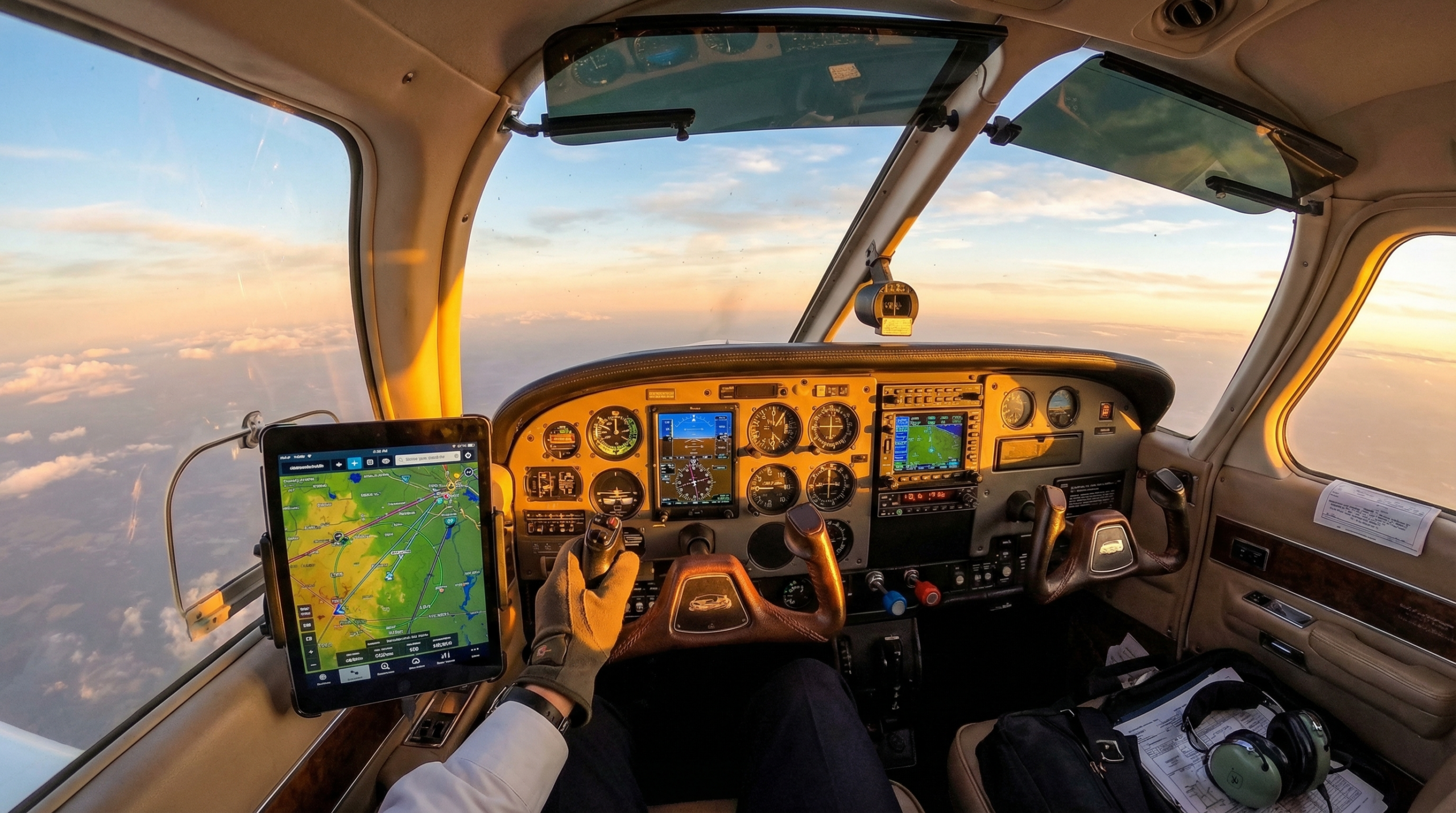
There’s a question that comes up every time someone compares Stratux to a sealed ADS-B receiver: “Aren’t they basically the same thing?”
The hardware does similar things. The price is similar. But the philosophy isn’t.
Open source means the code that runs in your cockpit is public. Anyone can read it, audit it, improve it, and build on it. That’s not a selling point — it’s a structural property. If a bug is found, any developer in the community can fix it. If a feature is missing, any developer in the community can add it. If the company that built the hardware disappears tomorrow, the software lives on.
Sealed devices can’t say that.
Repairability Isn’t a Feature — It’s a Commitment
Stratux is built around components you can replace. SDR dongles. GPS modules. Antennas. The Raspberry Pi at the core. Every piece is available, documented, and swappable. When something breaks — and in aviation, things break — you fix it. You don’t throw it away and buy a new one.
This is what we mean by “the Framework Laptop of aviation.” Framework became famous for making laptops repairable. The aviation equivalent has been overdue.
Think about what that means in practical terms. Five years from now, a sealed ADS-B receiver might be obsolete. No parts. No support. The manufacturer has moved on. Your Stratux, on the other hand, is built on standard hardware you can find on Amazon for under $15. A failed GPS module is a Tuesday afternoon project, not a $400 equipment replacement.
Right-to-repair isn’t a political stance. In aviation, it’s a safety argument.
No Vendor Lock-In
Open source software means your data, your config, and your setup belong to you. There’s no subscription to cancel. No firmware update that silently removes a feature. No end-of-support date that bricks working hardware.
What you build, you keep.
That matters in a cockpit where the rules are already complicated enough. Your Stratux will work with the EFB you have today and the one you switch to in three years. It works with ForeFlight®, Garmin Pilot, WingX, AvPlan, SkyDemon — any app that reads GDL 90 traffic and weather. No proprietary handshake. No exclusive compatibility list. Standards-based from the ground up.
Built by Pilots and Makers, Together
Stratux started as a community project on GitHub. It still is. The people who fly with it are the same people filing issues, testing builds, and writing documentation. That’s not marketing — it’s a development model.
When a pilot reported that GPS lock was slow at high altitude, the community investigated and shipped a fix. When a flight school wanted to run Stratux on multiple aircraft simultaneously, developers worked out the configuration. When someone found a bug in the AHRS calculation, a pull request fixed it in days — not months, not “your support contract doesn’t cover that.”
This is what an open community looks like when it’s working. The hardware gets better because the people using it have the access to make it better.
AHRS: A $20 Synthetic Vision Backup
Stratux includes an AHRS (Attitude and Heading Reference System) sensor. This gives your EFB pitch, roll, and heading data — enabling synthetic vision on your moving map without a certified ADAHRS system costing thousands of dollars.
It’s a backup aid, not certified avionics. Say that plainly and it’s still remarkable: for $379, you get ADS-B In traffic, weather, and a synthetic vision backup for your tablet. Treated as what it is — an enhancement to your situational awareness, not a replacement for your primary instruments — it earns its place in the cockpit.
The open-source architecture means if the AHRS performance on your specific aircraft could be improved, you can dig into the configuration. Calibration guides live in the community wiki. Edge cases get documented. Nothing is a black box.
Who This Is For
Not everyone needs open source avionics. If you want something sealed in a box, fully supported, and you’re comfortable with that tradeoff — that’s a legitimate choice.
But if you’re the kind of pilot who wants to understand what’s running in your cockpit, who’d rather fix something than replace it, who thinks the right to repair your own equipment shouldn’t require a lawyer — Stratux was built for you.
The GA community has always been full of builders and tinkerers. The original homebuilders. The guys who fab their own parts. The folks who know their aircraft better than any shop. Stratux fits that tradition. Open source isn’t a workaround. For a lot of pilots, it’s the point.
Get Started
The pre-built Stratux is available at [Crew Dog Electronics](https://crewdogelectronics.com/?utm_source=blog&utm_medium=organic&utm_campaign=identity-page) — ready to fly out of the box, no configuration required. If you want to build your own, the GitHub repository and community documentation are public and free.
Either way, what you’re getting isn’t just a receiver. It’s a piece of hardware with a philosophy behind it — one that assumes you’re smart enough to own what you buy.
*Status: DRAFT COMPLETE — 870 words | Pre-publish checklist: verify /why-open-source/ URL, add internal links to B17 (setup guide) + B18 (buyer’s guide), confirm RankMath keyword (“open source ADS-B”), generate DALL-E featured image before publish.*
*Scheduled: Pre-publish checklist Mar 8 | Publish Mar 10*