
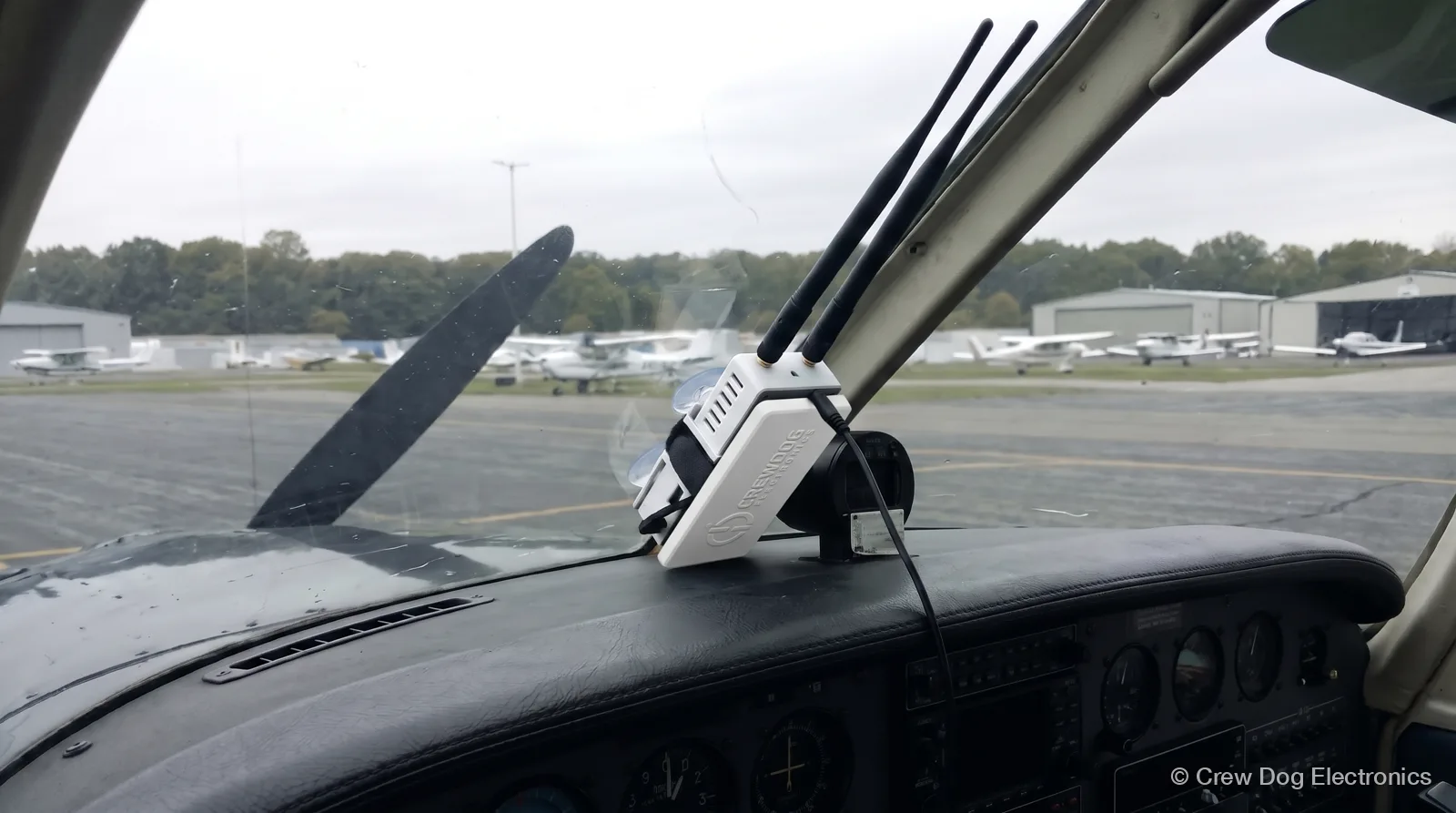
Put the 1090 MHz antenna on the 1090 port and the 978 MHz antenna on the 978 port. Hand-tighten both, and keep them upright with a view of the sky. That’s the right setup for most cockpits. A larger antenna can help where reception is poor. It won’t fix a problem that’s really power, GPS or being on the ground.
Which antenna goes on which port
Each port is labelled on the case. With the fan at the top, 1090 is on the left and 978 is on the right.
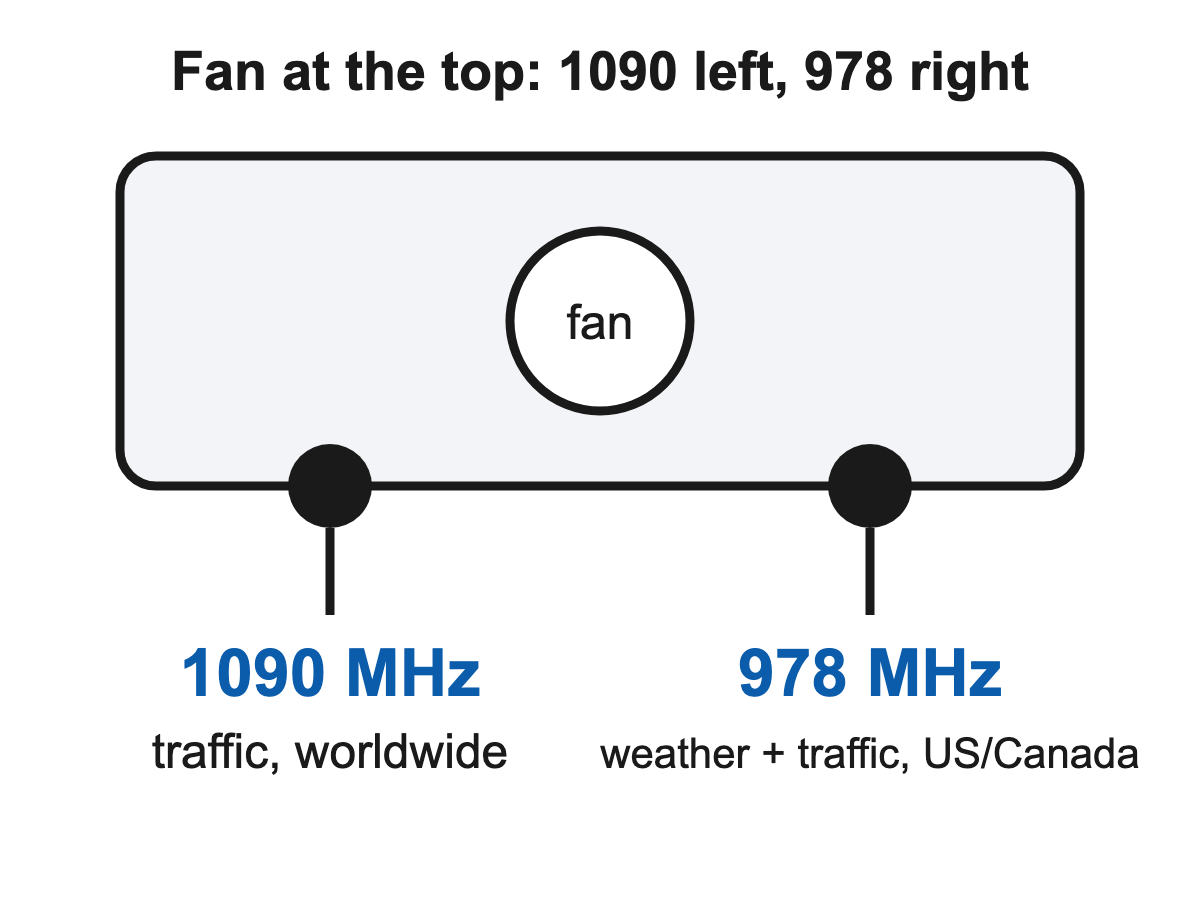
1090 hears traffic anywhere you fly. 978 weather needs a ground station in range, so check coverage before you leave that antenna off.
| Antenna | What it brings | Where it works |
|---|---|---|
| 1090 MHz | Traffic (1090ES) | Worldwide, on the ground and in the air |
| 978 MHz | Weather (FIS-B) and UAT traffic | Where 978 ground stations exist, such as the US and Canada |
If you fly where there aren’t any 978 ground stations, the 978 side gets no weather. It only hears nearby aircraft that transmit on UAT. Check coverage first. Stratux in Europe uses a separate 868 MHz radio for FLARM, covered on stratux.com.
Fit them by hand
Finger-tight is enough. Don’t use pliers. Behind each port is a small internal cable (a pigtail) to the radio, and over-tightening can break it. A broken 978 cable is a common repair and an inexpensive one, but it’s still a repair you can avoid.
If a port spins or wobbles instead:
- Power the receiver off and open the case.
- Hold the nut on the inside of the case.
- Tighten the nut on the outside with the wrench that comes with the case.
- Check the internal cable isn’t twisted before you close the case.
Where to put it in the cockpit
Keep the antennas vertical, away from large metal surfaces where you can, and give the receiver a view of the sky. The sky view matters for GPS as much as for the antennas. The glareshield or the windscreen on a suction mount is the usual spot for that reason.
Two things no antenna fixes:
- On the ground, weather is often out of range. That’s true however good your antennas are. See why there’s no weather on the ground.
- A traffic count that stays at zero. Check the status page first. What a normal status page looks like shows you what to look at.
When a bigger antenna helps
Larger antennas can help in cockpits with poor reception. Stratux antennas come in a compact 3 dBi size and a large 5 dBi size, and both are sold as parts. We don’t have measured range figures for either, so we won’t promise a distance. Above about FL200, the larger antennas really make a difference.
A sensible order if you think reception is the problem:
- Move the receiver to the glareshield, antennas upright, and watch the status page again.
- Check the antennas are on the right ports and fitted snugly by hand.
- Only then try the larger antennas.
If the 978 count stays at zero
Check the pigtail first. The 978 radio connects through a small u.FL cable, which can break when an antenna is forced. The Stratux antennas guide has the details, and choosing and identifying Stratux radios explains the 978 radio itself.
Frequently asked questions
Can I tighten the antennas with pliers?
No. Finger-tight is enough, and pliers can break the small internal cables that connect the ports to the radios.
Which antenna goes on which port?
The 978 MHz antenna goes on the 978 port and the 1090 MHz antenna on the 1090 port. With the fan at the top, 1090 is on the left.
Will a bigger antenna fix no weather?
Not on the ground, where weather is often out of range. In the air, larger antennas can help in cockpits with poor reception.
Do I need the 978 antenna outside the US?
Yes, if you fly in Canada or another place with a 978 station, such as Finland. Check coverage first. 1090 MHz works worldwide.
Next step
Before your next flight, check that both antennas are on the right ports, snug by hand and upright. The receiver should have a view of the sky. If you’re still choosing a receiver, the Stratux receiver page lists what’s in the box, and which Stratux is right for you walks through the choice.