
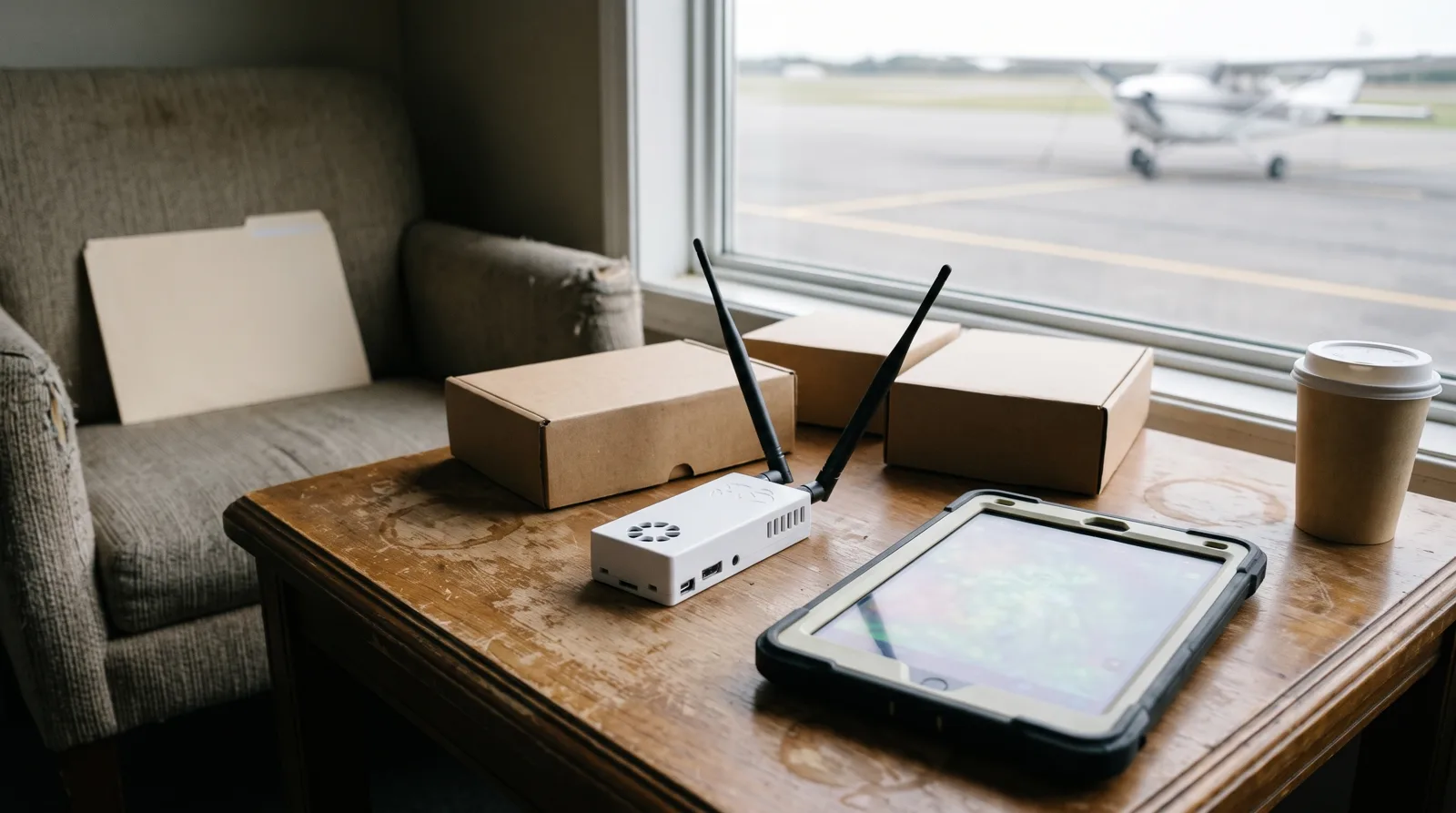
Pick a portable ADS-B receiver that covers 1090 MHz and 978 MHz. It should send GDL-90 to your EFB, have a GPS you can rely on, and be powered and repaired without drama. Those five points decide most of the difference between receivers. The checks below point to the Stratux project’s own guides, and they apply to any receiver you’re comparing.
Which radios does it receive?
ForeFlight® needs two bands for the full picture. 1090 MHz carries aircraft traffic worldwide. 978 MHz UAT carries FIS-B weather and ground-relayed traffic, which mostly means the US and Canada today. A receiver with only 1090 MHz shows traffic but no ground-station weather. Outside the US and Canada, UAT weather depends on whether a ground station is nearby. Some places, such as Finland, now have one. Source: Stratux Learn, No weather or traffic.
Stratux receives both bands. It’s got a dedicated 978 MHz UAT radio and a 1090 MHz radio.
Does it send GDL-90 to your app?
GDL-90 is the common data format that many EFB apps read over Wi-Fi. Stratux sends GDL-90, and ForeFlight® reads it without a pairing step. Check your app before you buy. Garmin Pilot works with Stratux on iPad and iPhone, but it doesn’t work on Android. The current list is at stratux.com/apps.
What GPS does it use?
The GPS gives the receiver and your EFB a position. Stratux autodetects several u-blox USB modules, including the VK-162. It uses one GPS source at a time, so a second GPS adds backup, not accuracy. WAAS support depends on the module. Check its specs before you count on it. Source: Stratux Learn, GPS modules and interference.
The first fix after a fresh install can take a while, often several minutes, outdoors. Don’t panic if it’s slow. Source: Stratux Learn, GPS troubleshooting.
Is there an AHRS option?
AHRS adds pitch and roll to the EFB. ForeFlight® needs it for the attitude part of synthetic vision. Terrain and obstacles show without it (ForeFlight support). The AHRS is optional, it’s a backup, and it isn’t certified for IFR. Source: Stratux Learn, AHRS on Stratux.
How is it powered and kept cool?
Stratux needs a power source that delivers at least 2 A. A 1 A phone charger causes reboots and dropped Wi-Fi, which look like software faults. The fan speeds up to hold the CPU near 50 °C, so keep the side vents clear. Source: Stratux Learn, Power and status lights.
What comes in the box?
A typical pre-built Stratux with internal GPS ships with the receiver on a suction mount, a battery, a strap, a microSD card and a power cable. That comes from our product listing. Check the listing for the exact contents of the model you’re picking, since kits change.
Can you repair and update it?
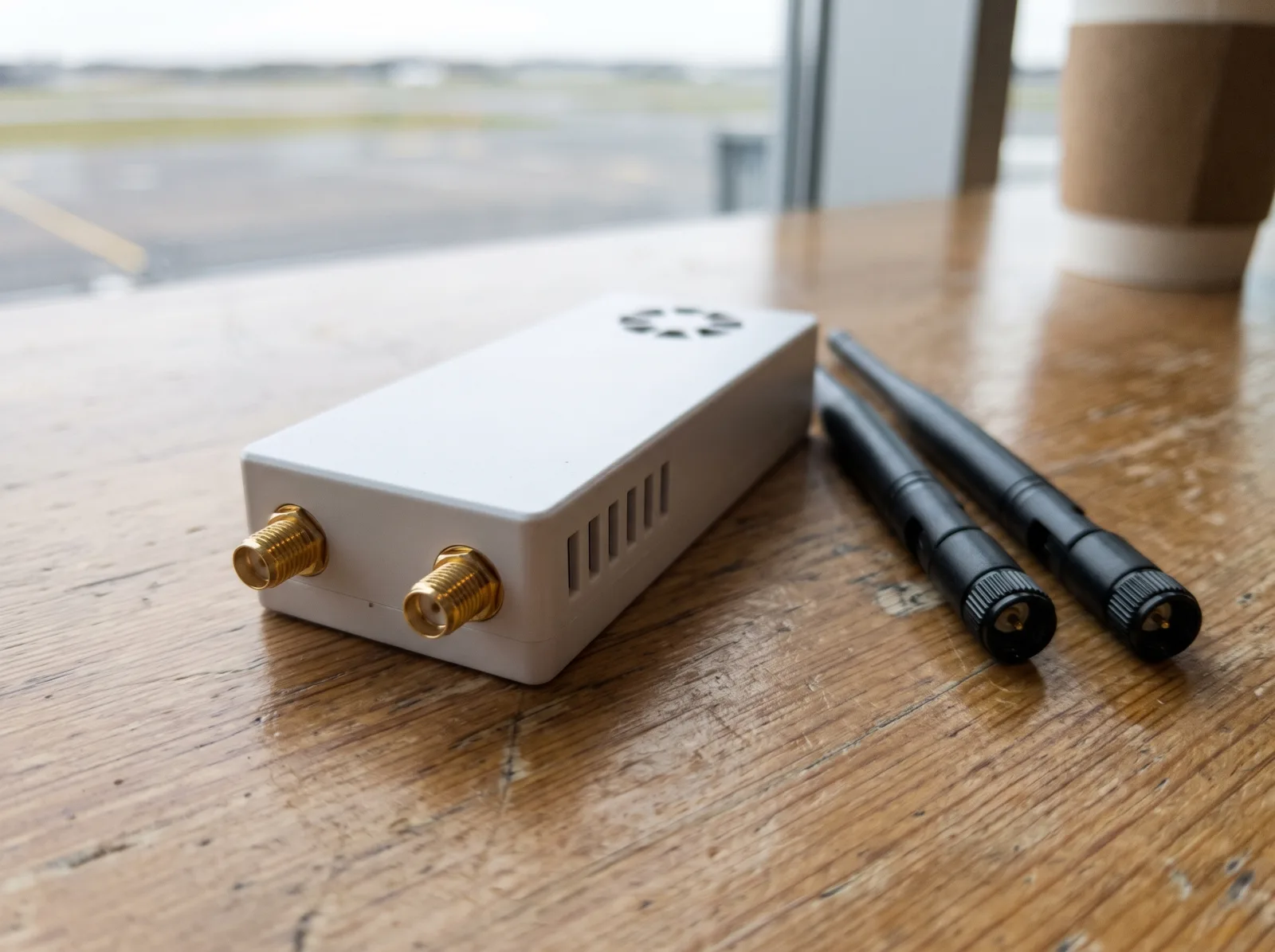
The software is public, and the hardware uses standard parts. You can update it yourself. Download the software from the Stratux releases on GitHub or from stratux.com/download, and unzip it before you flash the card. Source: Stratux Learn, Update software. Antennas should be hand-tightened only. Don’t use pliers. They can break the internal pigtails. Source: Stratux Learn, Antennas.
The Stratux project began in 2015, and its code has been open source since the first public post. Source: Stratux history.
What a receiver cannot do
A portable receiver shows what ground stations and aircraft broadcast. It doesn’t replace a preflight weather briefing. The radar it shows is several minutes old by the time it reaches you. Source: Stratux Learn, Legal and limitations.
FAQ
What is the best ADS-B receiver for ForeFlight®?
The one that passes the checks above for the way you fly. Run the same list on any receiver you’re comparing, Stratux included.
Does a 1090-only receiver show weather?
No. FIS-B weather comes on 978 MHz. A 1090-only unit shows traffic only.
Does Stratux need a subscription?
No. The traffic and weather broadcasts are free. Your EFB app may have its own subscription. Source: Stratux FAQ.
Next step
Check your EFB on the Stratux apps list, then pick the radio set that covers the airspace you fly. Questions? Email us. We carry the current Stratux receiver line.